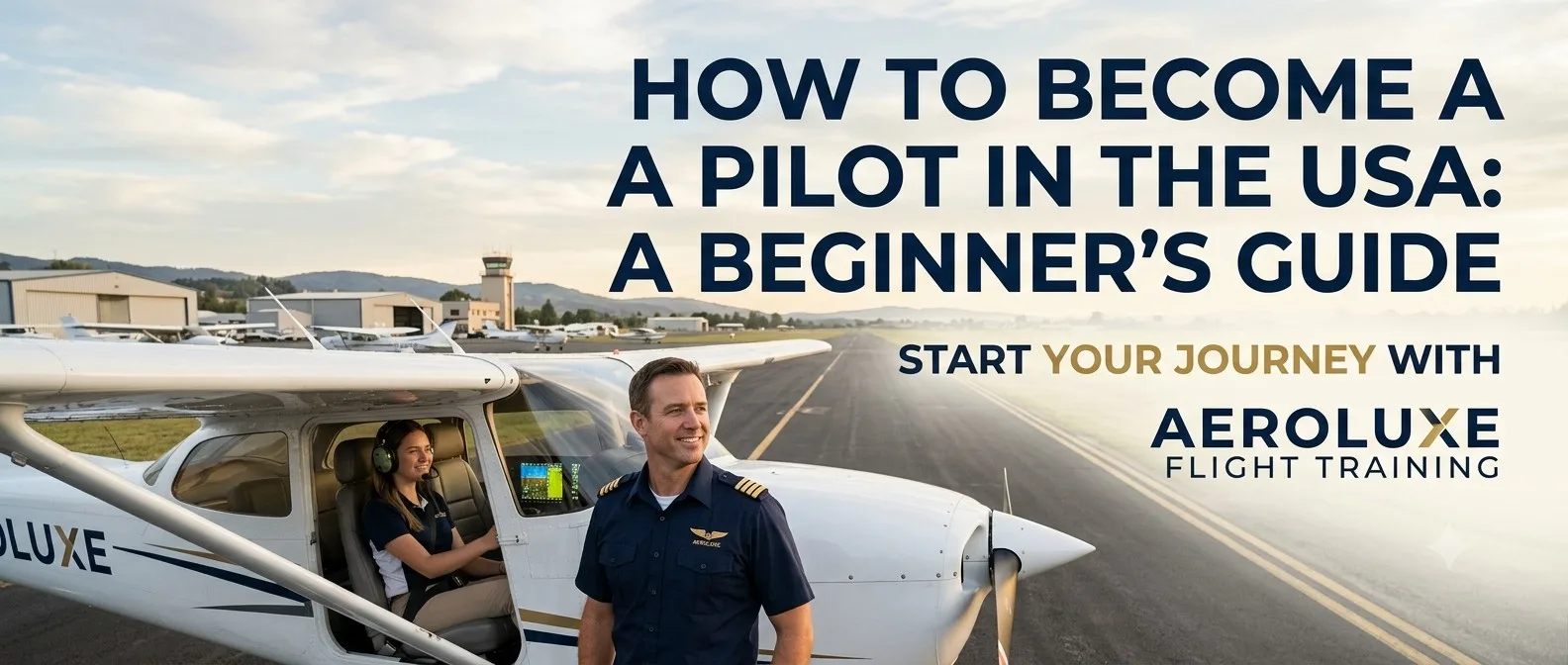
Every commercial airline captain sitting at 35,000 feet started in the exact same place: sitting in a trainer aircraft, looking out over the runway, and taking control of the yoke for the very first time.
With growing global demand for qualified aviators, aviation offers one of the most rewarding career pathways available today. Whether your goal is to fly recreationally on weekends or command commercial jets, here is your step-by-step guide to earning your wings in the USA.
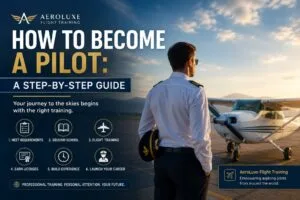
Step 1: Confirm Eligibility and FAA Basics
Before enrolling in ground school, ensure you meet the Federal Aviation Administration (FAA) baseline requirements:
● Age Requirements: Minimum 16 years old to fly solo; 17 for a Private Pilot License (PPL); 23 for an Airline Transport Pilot (ATP) certificate.
● Language Proficiency: Read, speak, write, and understand English fluently.
● Medical Fitness: Pass an FAA Medical Examination by an Aviation Medical Examiner (AME) to obtain a First, Second, or Third-Class Medical Certificate.
Step 2: Book a Discovery Flight
Do not commit to a full curriculum without testing the waters. A Discovery Flight is an introductory 60-minute lesson in which an experienced flight instructor takes you up, demonstrates basic manoeuvres, and hands you the controls.
At academies like AeroLuxe Flight Training, introductory sessions give aspiring aviators direct, hands-on experience with advanced aircraft and professional flight instruction right from day one.
Step 3: Choose the Right Flight School Model
Flight training in the U.S. generally falls under two FAA categories:
Training Path | Structure | Best Suited For |
Part 61 Programs | Highly flexible, self-paced, pay-as-you-go | Students balancing aviation with a full-time job or personal commitments |
Part 141 Programs | Fast-paced, structured, syllabus-driven | Career-focused students aiming for structured commercial pilot pipelines |
Step 4: Master the Step-by-Step Pilot Certificates
Building a career in the skies is a sequential progression:
1. Private Pilot License (PPL): Learn fundamentals of flight control, solo takeoffs and landings, navigation, and emergency protocols.
2. Instrument Rating (IR): Train to operate strictly by sole reference to instruments, essential for navigating through clouds and low-visibility weather.
3. Commercial Pilot License (CPL): Develop advanced technical precision and single-engine or multi-engine proficiency to legally earn income as a professional pilot.
4. Certified Flight Instructor (CFI): Build toward the 1,500 flight hours required for commercial airlines while mentoring the next generation of students.
Why Train with AeroLuxe Flight Training?
Where you train determines the quality of your decision-making, safety habits, and confidence in the air.
Based in Lincoln, California, AeroLuxe Flight Training provides structured, career-focused aviation programs tailored to both private and professional pathways:
● Modern Fleet & Strict Safety: Train on well-maintained single-engine and twin-engine aircraft equipped with contemporary flight decks.
● Expert Instruction: Learn directly from seasoned instructors dedicated to practical, real-world aviation discipline.
● End-to-End Career Support: Benefit from flexible scheduling, discounted training packages, and dedicated career guidance as you transition from student pilot to commercial flight deck.
Ready for Takeoff?
The view from the flight deck is unlike any other workspace in the world. Connect with the admissions team at AeroLuxe Flight Training today to schedule your discovery flight or explore customized training options.