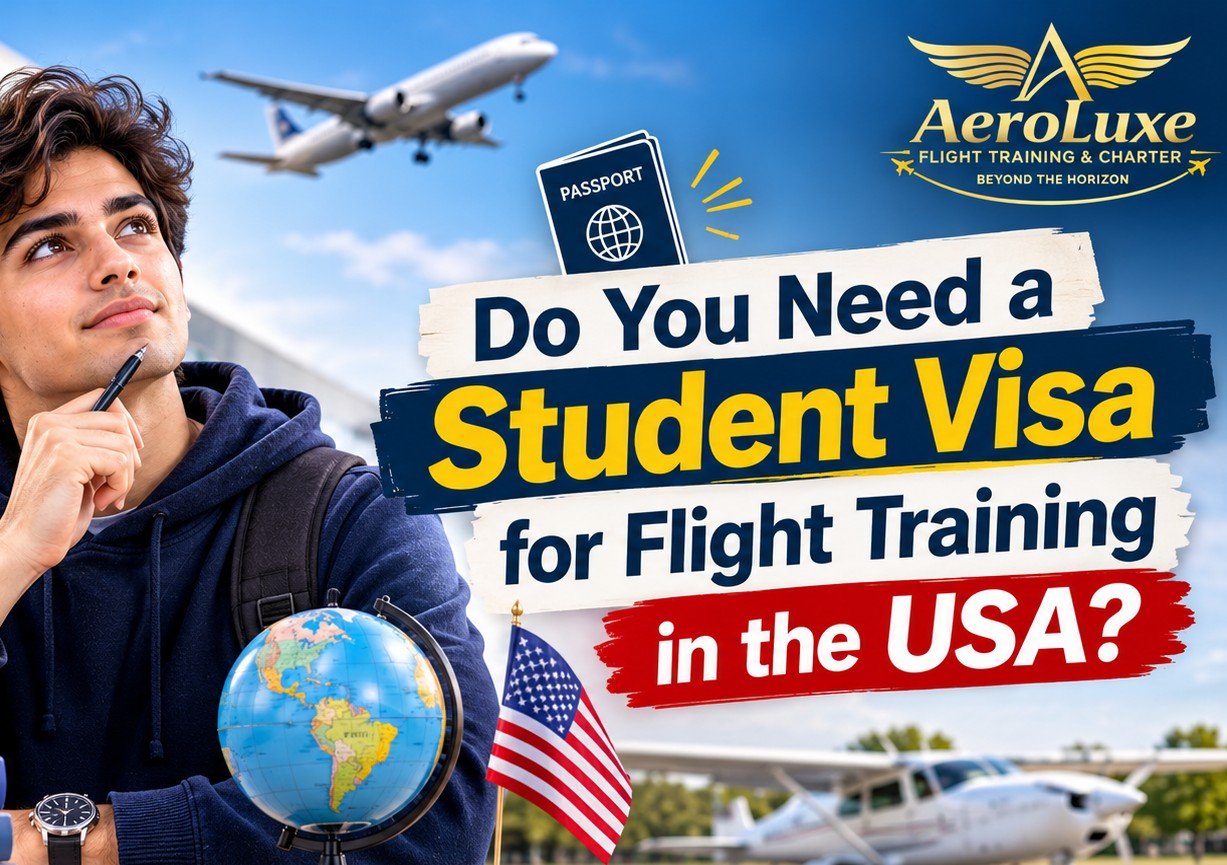
It is one of the most common questions from aspiring pilots abroad, and getting it wrong can cost you time and money. Here is the answer, step by step.
Step 1: Start With the Short Answer
In most cases, yes. If you are not a US citizen and want to train for a pilot certificate or rating in the United States, you generally need a student visa, either an M-1 or an F-1, before you begin.
Step 2: Know Why a Tourist Visa Is Not Enough
Visitor visas (B-1 and B-2) and visa-free travel generally do not allow you to enrol in a course of study. That includes most flight training that leads to a certificate. Training on the wrong status can put your immigration record at risk, so be cautious of any school that says otherwise.
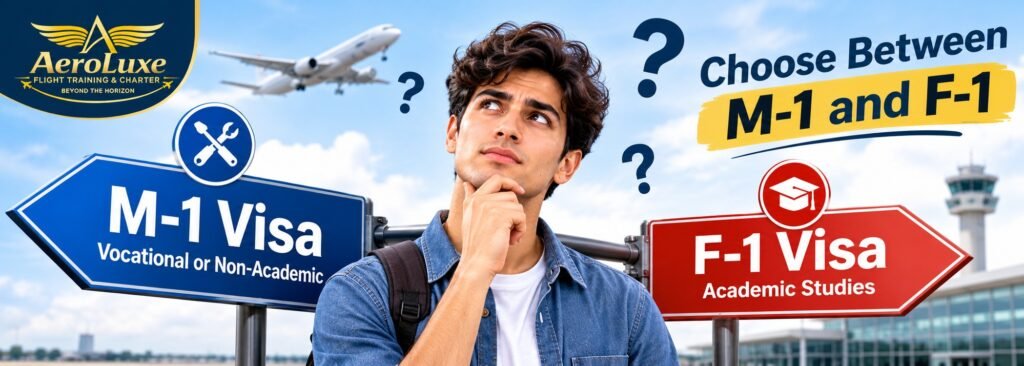
Step 3: Choose Between M-1 and F-1
- M-1: for vocational programmes such as pilot training. It is usually granted for the length of your programme, and regular work is not allowed.
- F-1: for academic programmes, such as a university degree that includes flight training. It generally allows a longer stay.
Decide before you start, because switching between the two inside the US is generally not allowed.
Step 4: Pick an SEVP-Certified School
Only schools approved by the Student and Exchange Visitor Program (SEVP) can issue the Form I-20. You cannot apply for your student visa without it, so confirm certification before you pay any deposit.
Step 5: Apply for Your Visa
Once you hold your I-20, you will typically:
- Pay the SEVIS fee
- Complete the DS-160 online application
- Attend a visa interview at a US embassy or consulate
- Show proof of funds and strong ties to your home country
Step 6: Add TSA Approval
A visa alone is not enough. Non-US citizens also need approval from the TSA’s Flight Training Security Program before starting training for a new certificate or rating. It is a separate process, so allow several weeks for it.
Step 7: Know the Exceptions
Some people and situations are treated differently:
- Green card holders do not need a student visa, but they still need TSA approval.
- Short introductory flights and ground school are treated differently from certificate training for TSA purposes. Ask your school or the embassy how this applies to your visa.
When in doubt, ask before you book anything.
Rules change and cases differ. Confirm your situation with your school, the TSA and the US embassy. This article is general information, not immigration advice.
✅ Quick Takeaway
- Certificate training generally needs an M-1 or F-1 visa
- A tourist visa is generally not accepted
- Your school must be SEVP-certified
- TSA approval is a separate step
Begin Your Journey With Aeroluxe Flight Training
At Aeroluxe Flight Training, we help international students understand their options clearly, before they spend a single dollar. Our experienced instructors build the skill and professionalism that airlines value, and our team helps you plan each step with confidence.
The right visa is the first step to the right start. Let’s plan it together.
Contact Aeroluxe Flight Training today to talk through your pilot training journey.